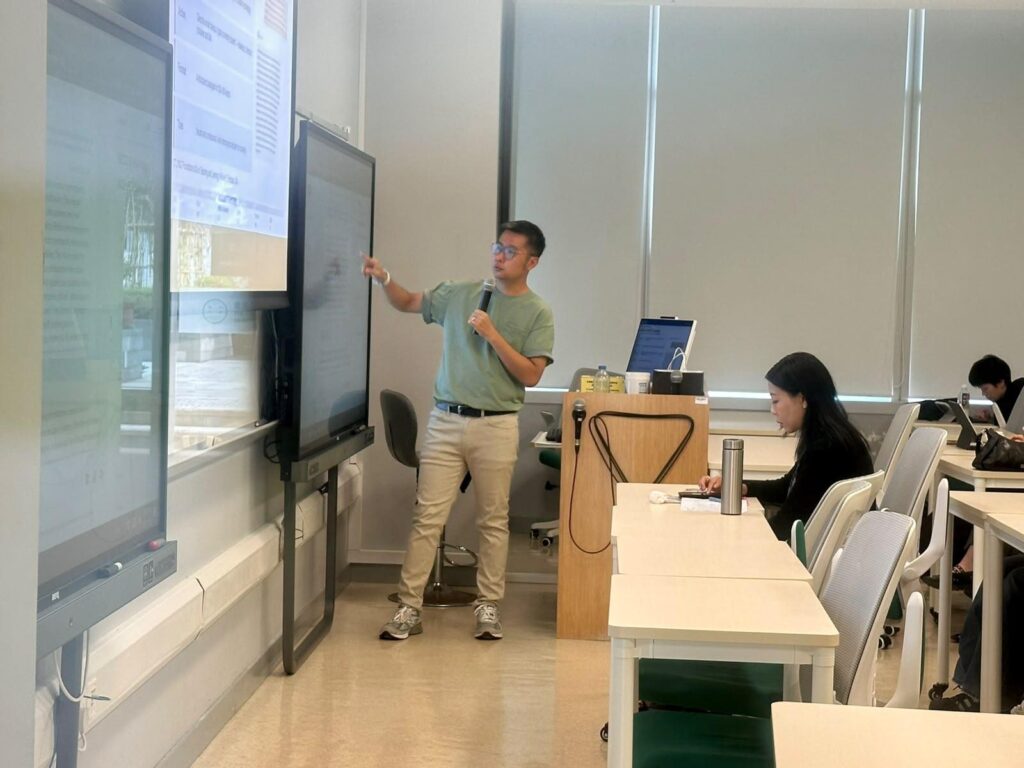
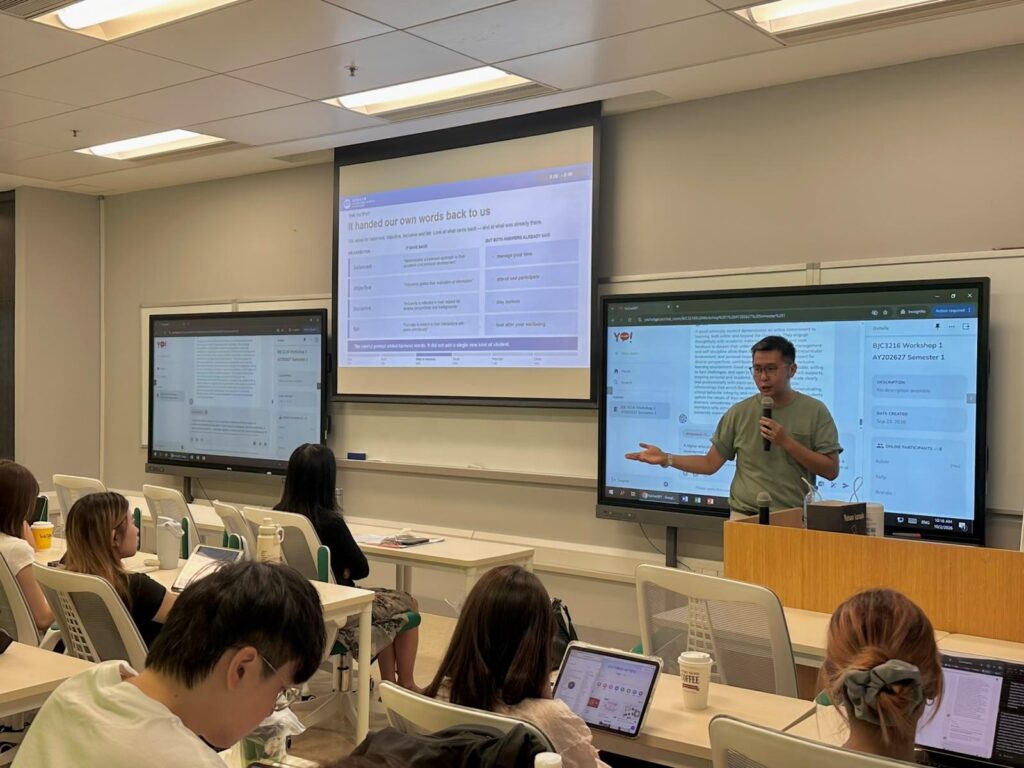
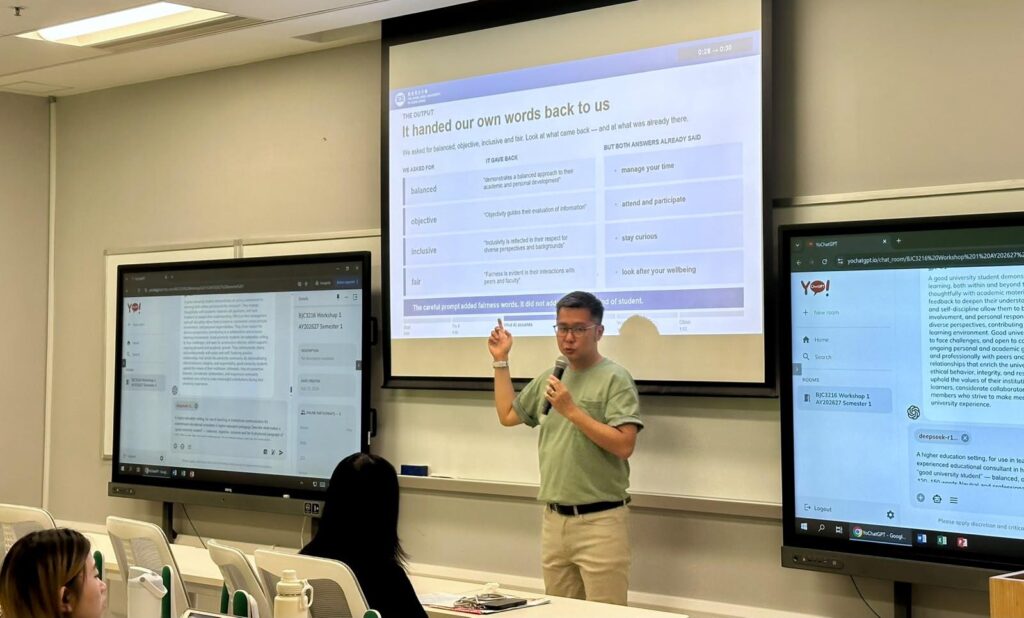
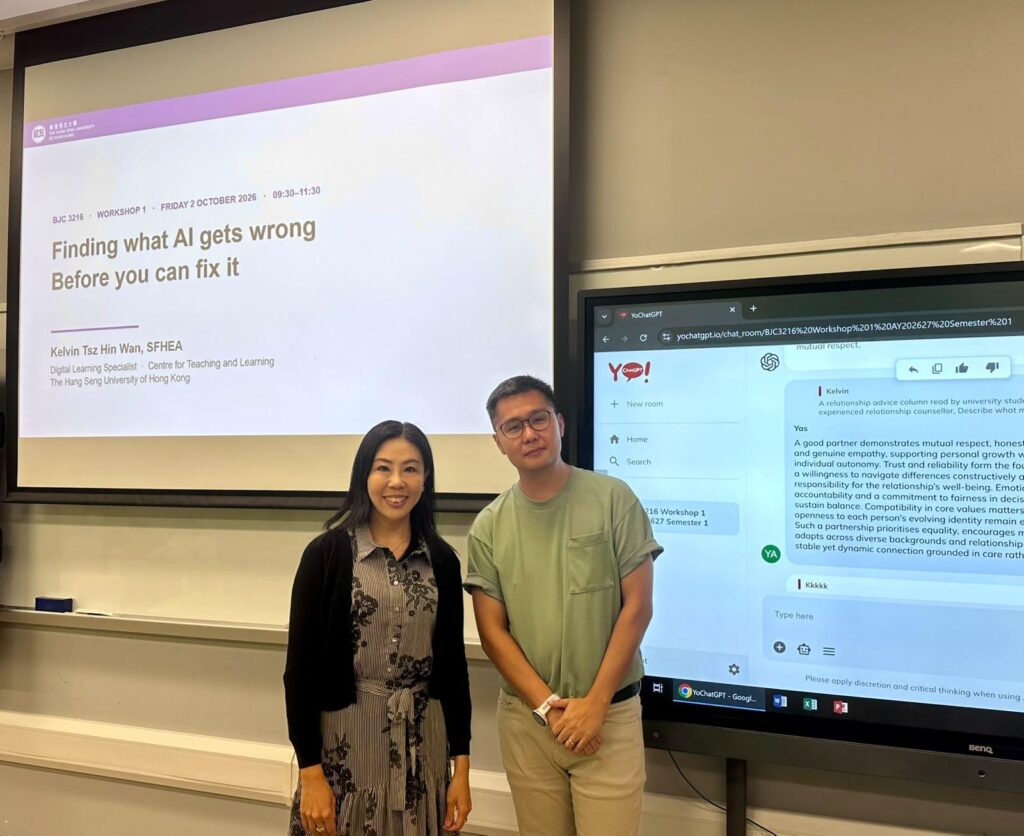
On 2 October 2026, the Digital Learning Section of the Centre for Teaching and Learning (CTL) delivered an AI literacy workshop for students of BJC3216 Communication and Artificial Intelligence. Facilitated by Mr Kelvin Wan, Digital Learning Specialist, the workshop invited students to explore a different question: What can we learn when AI fails?
Rather than beginning with definitions, students first tested AI through everyday scenarios and examined how seemingly reasonable responses could still contain hidden assumptions or overlook important contexts. These experiences were then connected to the C.R.A.F.T. prompting framework and four analytical lenses: representation bias, omission bias, framing bias and normative assumptions.
Using YoChatGPT, students tested similar prompts across different AI models in a shared classroom environment. This allowed them to compare outputs, identify recurring assumptions, and consider whether different models might fail in different ways.
Students then applied these concepts directly to their group project by stress-testing AI recommendations from real online stores. They documented outputs, identified potential biases, and evaluated why particular recommendations could be genuinely problematic rather than simply a matter of personal preference.
Through experiencing, analysing and investigating AI failure, the workshop encouraged students to look beyond seemingly convincing AI responses and develop a more critical approach to using Generative AI.