On 4–5 June 2026, the AI Hub@HSU, jointly established by the Centre for Teaching and Learning (CTL), the Information Technology Services Centre (ITSC) and the University Library (LIB), organised its first AI Summer Training Programme 2026.
With over 80 academic and administrative staff members, the one and half day programme aimed to strengthen AI literacy and support the practical and responsible integration of artificial intelligence into teaching, learning, research and professional practice.
The programme featured three key themes: AI-supported academic workflows, AI-enabled content creation, and AI applications in teaching and learning. Participants explored tools such as Gemini, NotebookLM, AI-assisted multimedia creation, and learning analytics, alongside institutional case studies. The programme also included panel discussions and sharing sessions with local and overseas speakers from various universities and educational institutions, fostering dialogue on emerging opportunities and challenges in AI adoption in higher education.
The first day of the programme commenced with Opening Remarks delivered by Professor Jeanne Fu, Vice-President (Learning and Student Experience). Throughout the programme, representatives from AI Hub@HSU—including Dr Ben Cheng, Director of the Centre for Teaching and Learning; Mr Michael Cheng, Librarian; and Mr Delon Wong, Director of ITSC—were also invited to deliver remarks, demonstrating strong support for the programme.
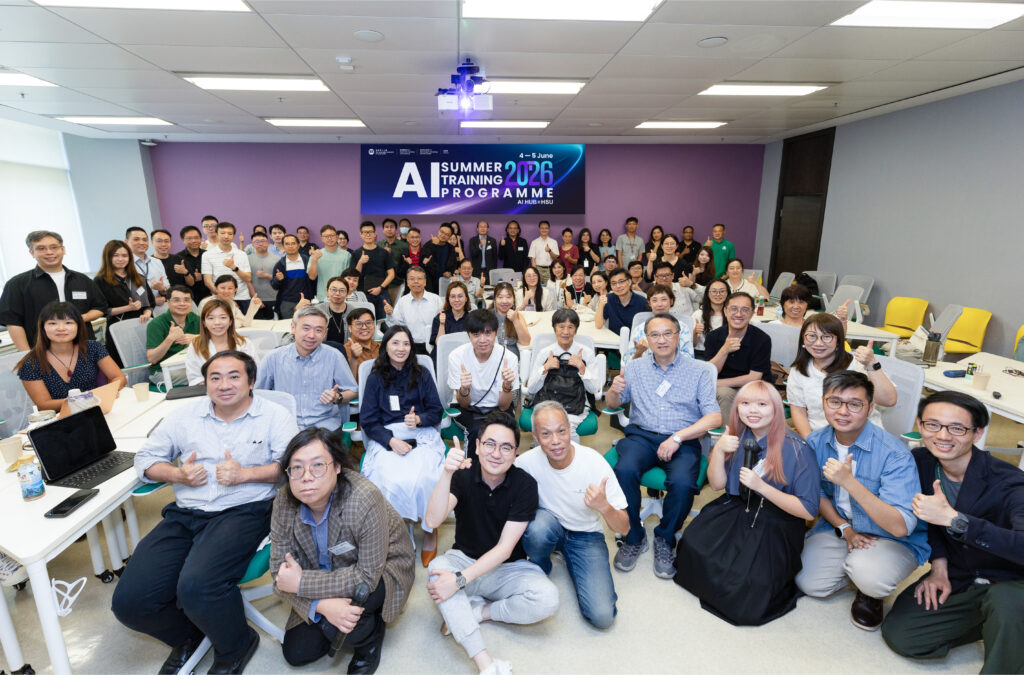
The first AI Summer Training Programme, organised by AI HUB@HSU, attracts over 80 participants to explore practical AI applications in teaching, research and administrative work.
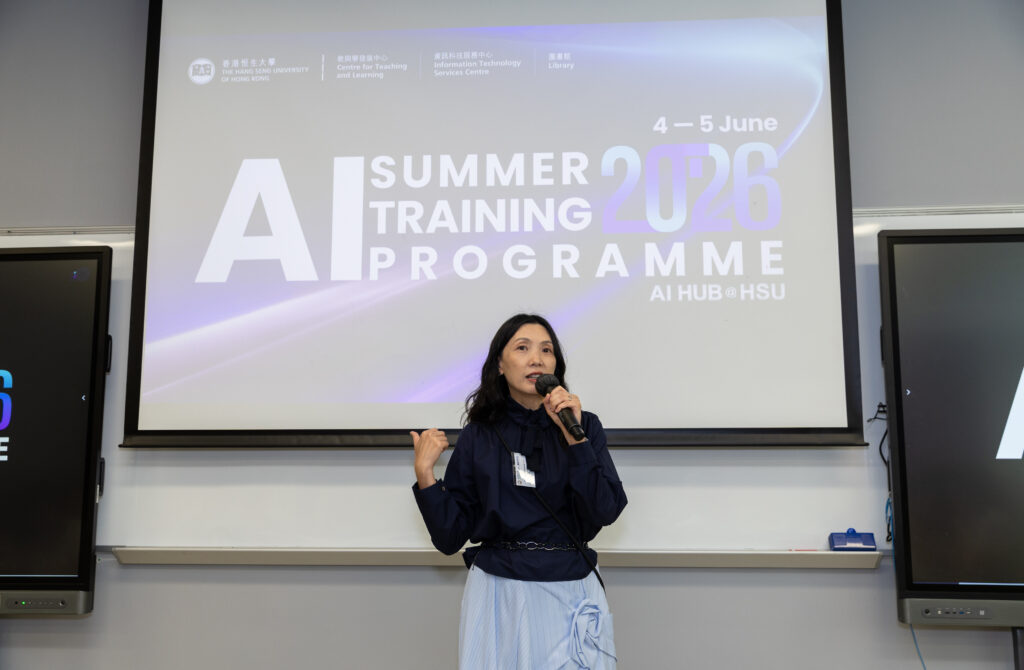
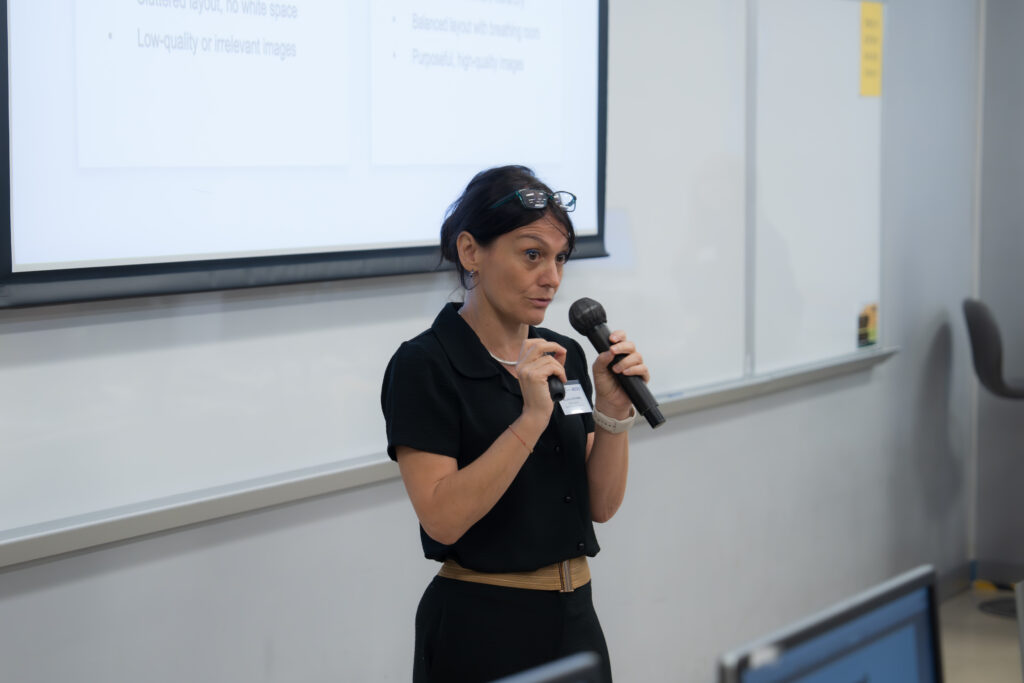
Professor Jeanne Fu welcomes participants and highlights the importance of AI literacy and responsible AI adoption in higher education.
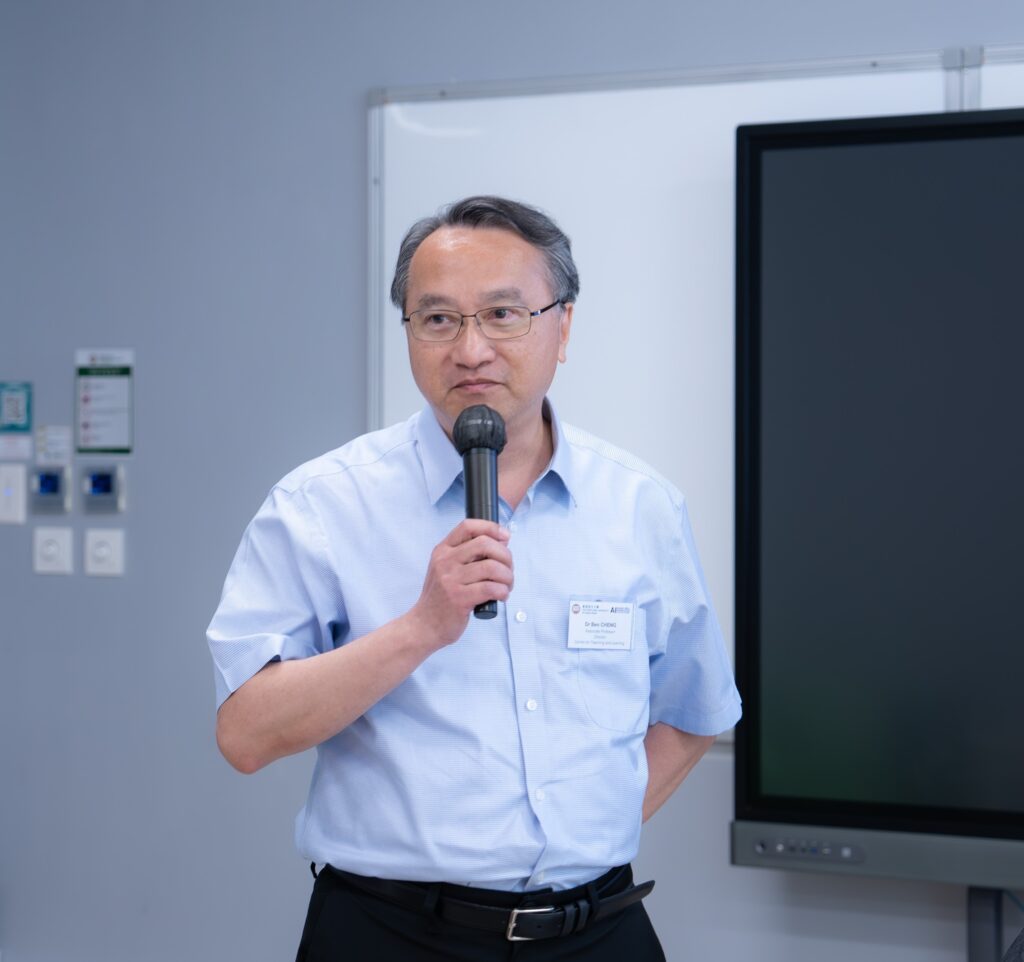
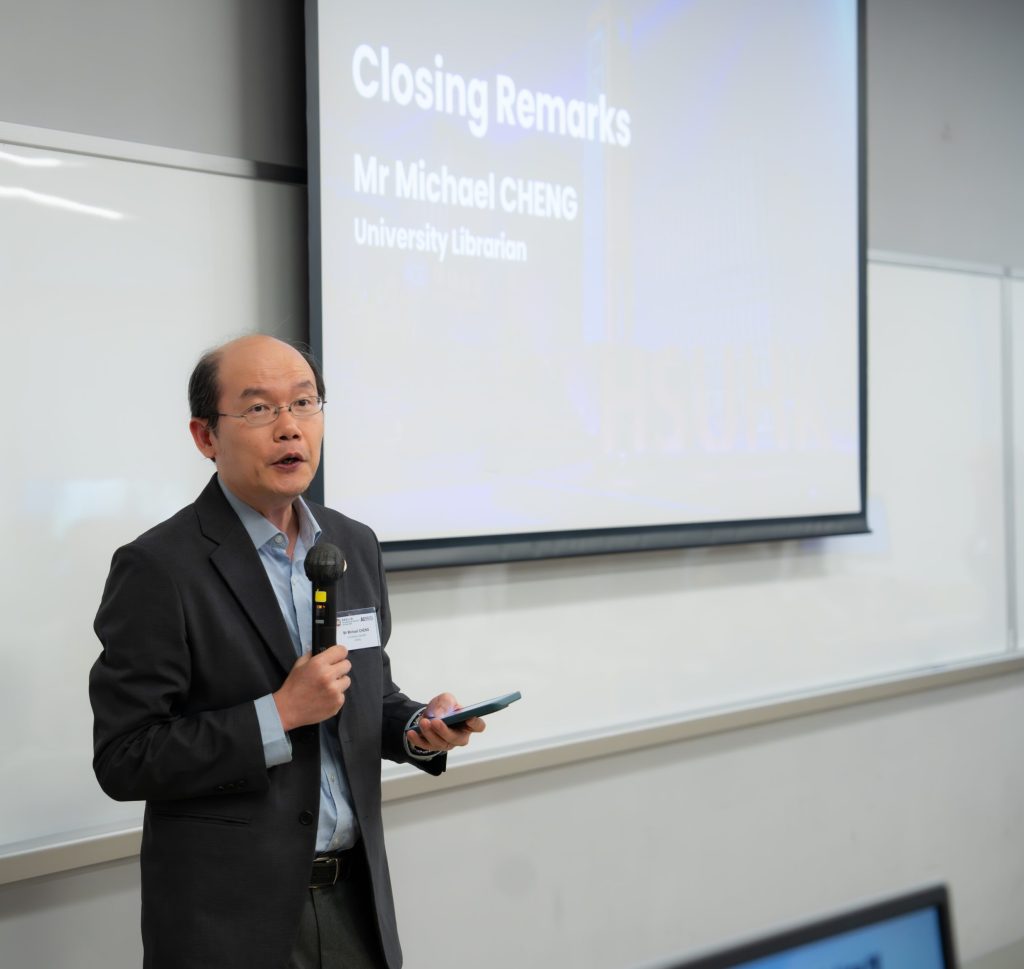
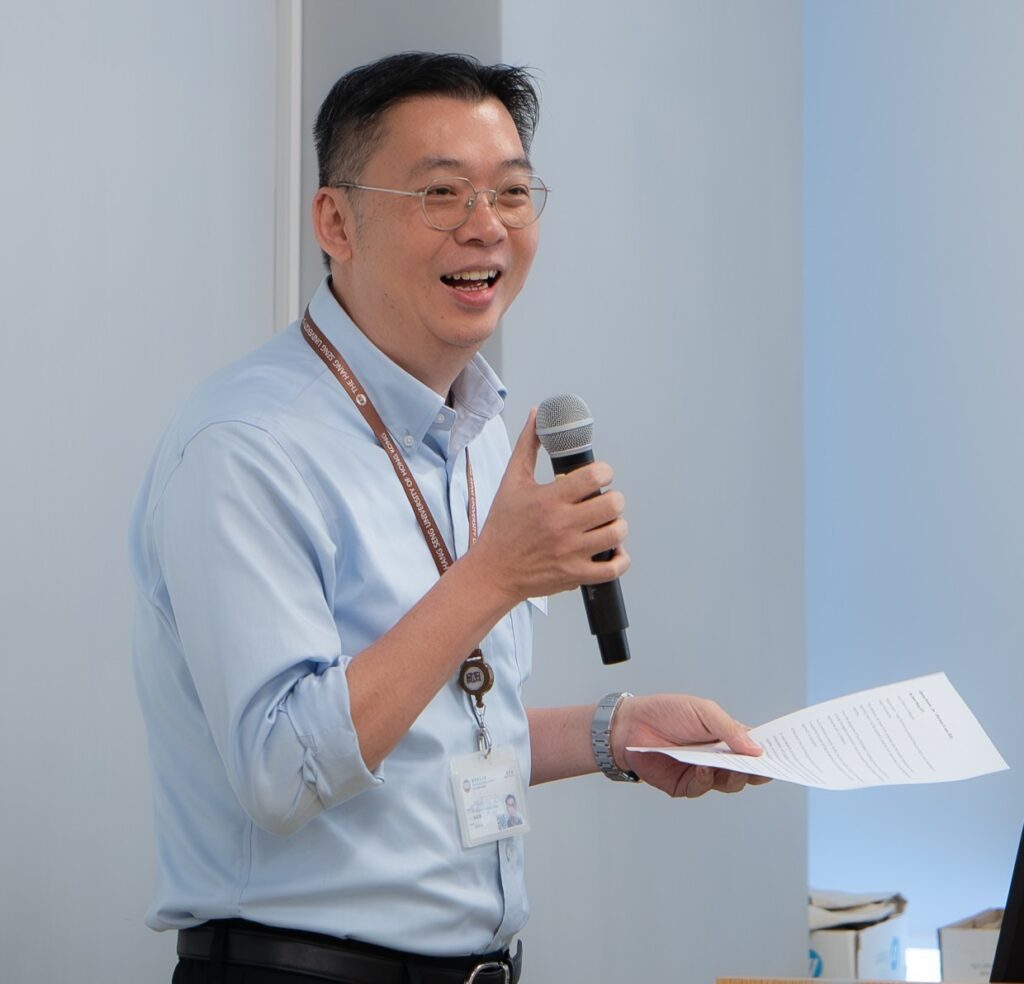
Representatives from AI Hub@HSU: (from left) Dr Ben Cheng, Mr Michael Cheng, Mr Delon Wong
Theme 1: Gemini & AI-Supported Academic Workflows
The programme commenced with a series of sessions focusing on AI-supported academic workflows and institutional AI initiatives. Colleagues from CTL and ITSC introduced the Moodle AI Assistant Pilot and CTL1002 AI Foundational MOOC, providing participants with an overview of the University’s latest AI-enhanced learning initiatives.
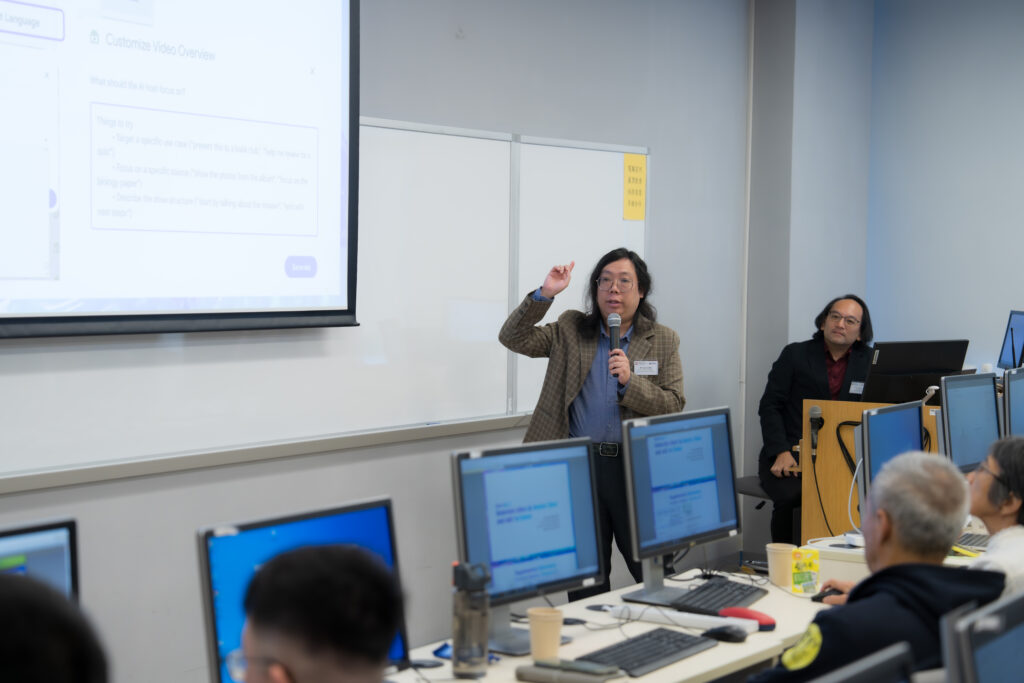
Ms Lavender Choi (ITSC) and Mr Kelvin Wan, SFHEA (CTL) demonstrated the use of NotebookLM as an AI-supported research companion for literature review, knowledge organisation, and synthesis. Participants also explored AI-enhanced academic resources available through the Library, presented by Ms Jenny Chan (LIB), showcasing how AI tools can support teaching, research, and scholarly inquiry.
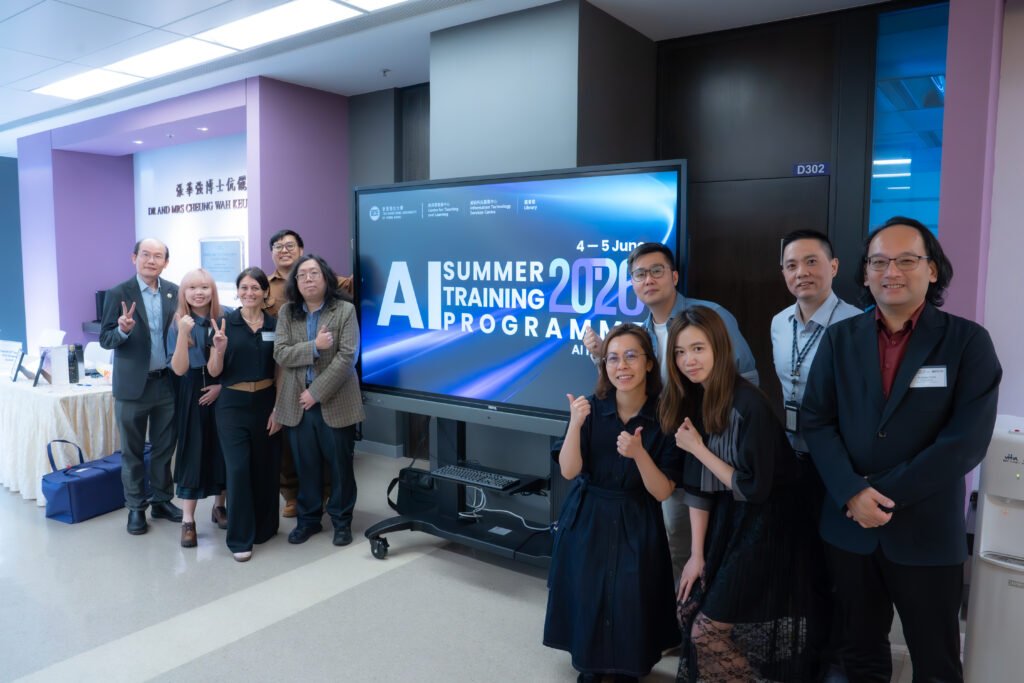
Theme 2: AI for Creative Teaching and Learning Content
The afternoon sessions focused on the creative use of AI in teaching and learning content development. Mr Frankie Tsang (LIB) shared practical guidance on AI and copyright considerations, highlighting responsible use and licensing issues surrounding AI-generated materials.
Participants were then introduced to AI-assisted video production workflows by Mr Andy Chan, FHEA (CTL), and Dr Sobel Chan (SCOM), who demonstrated how AI tools can support the development of micro-learning and flipped classroom resources. Mr Andy Chan also shared practical examples of AI creative content applications in educational contexts.
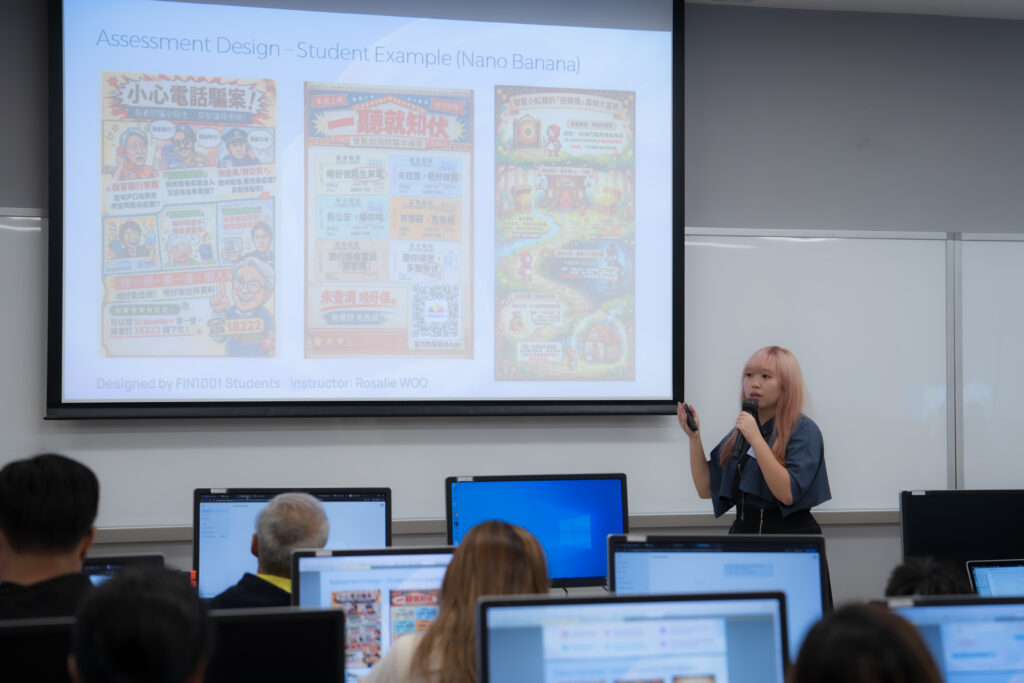
The day concluded with an engaging session on AI image generation for teaching materials, jointly delivered by Ms Charlotte Lee (CTL) and Ms Laura Cavanna (AAD), showcasing how educators can create customised visuals, illustrations, and presentation graphics to support learning.
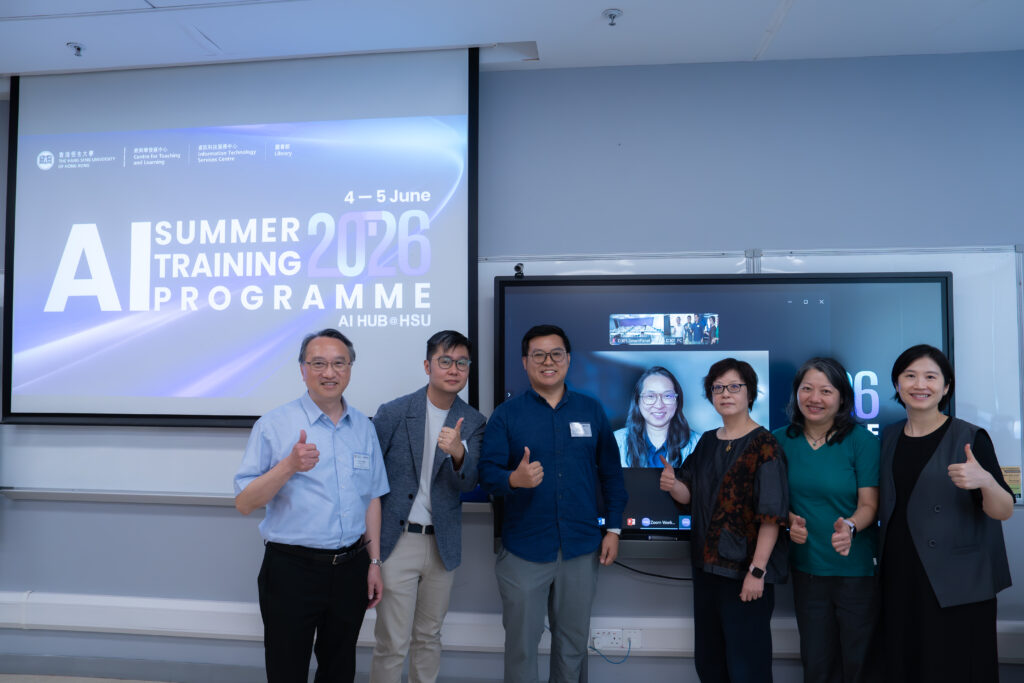
Theme 3: AI in Learning Environment & Practical Case Sharing
Day Two focused on real-world applications of AI in teaching and learning environments. Mr Andy Chan (CTL) and Mr Dick Chan (The Hong Kong Polytechnic University) shared insights into the use of AI and learning analytics to better understand student engagement and learning behaviours.
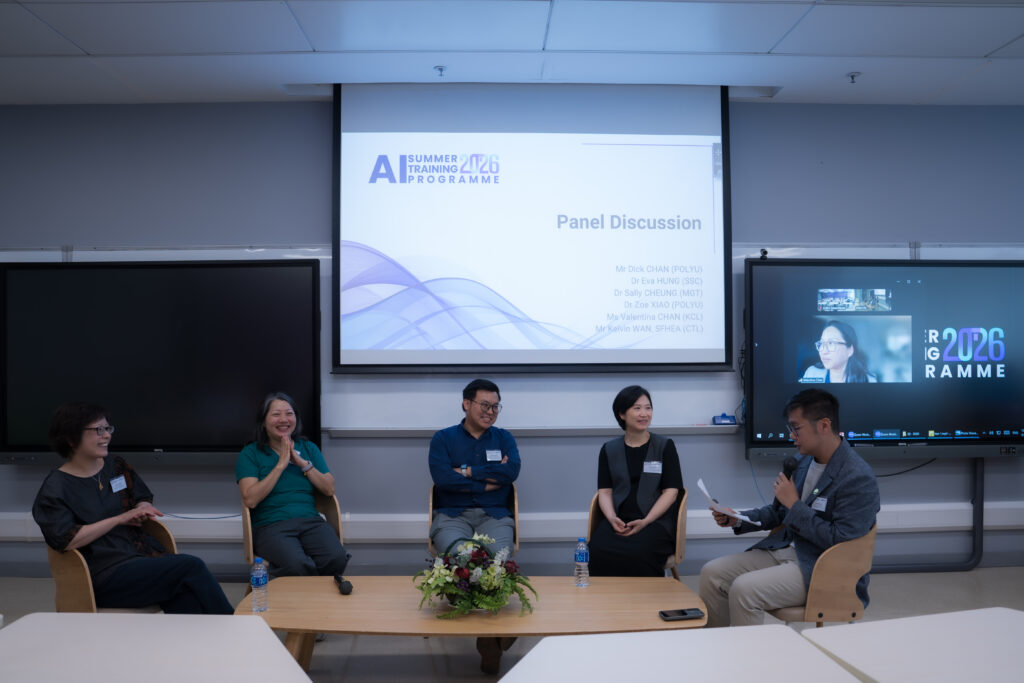
The programme concluded with an AI-Empowered Teaching Showcase and Panel Discussion featuring both internal and external perspectives on AI-enhanced education. Sharing sessions were delivered by Dr Sally Cheung (Department of Management, HSUHK), Dr Eva Hung (Department of Social Science, HSUHK), Dr Zoe Xiao (The Hong Kong Polytechnic University), and Ms Valentina Chan (King’s College London). The showcase highlighted diverse approaches to integrating AI into teaching practice, while the panel discussion encouraged participants to reflect on the opportunities, challenges, and future directions of AI in higher education.
Strengthening AI Literacy Through Cross-Unit Collaboration
A key strength of the programme was its cross-unit and cross-institutional collaboration. Bringing together expertise from CTL, ITSC, LIB, and external partners, the programme provided participants with opportunities to learn from multiple perspectives while fostering meaningful dialogue on the future of AI in higher education.
The programme attracted over 80 participants from academic and professional services units across the University. More than 40 participants completed all three thematic sessions and fulfilled the attendance requirements for the Certificate of Completion. It was particularly encouraging to welcome many first-time participants to CTL Digital Learning professional development activities, reflecting the growing interest in AI-enhanced teaching, learning, and academic practice across disciplines.
The Centre for Teaching and Learning would like to express its sincere appreciation to all officiating guests, speakers, panellists, collaborators, and participants for contributing to the success of the programme. Special thanks are extended to colleagues from AI Hub@HSU, CTL, ITSC, and LIB for their dedication and collaboration in delivering this cross-unit initiative.
As HSUHK continues to advance its AI literacy and digital transformation agenda, the AI Summer Training Programme represents an important step in empowering educators to adopt AI in responsible, innovative, and pedagogically sound ways.